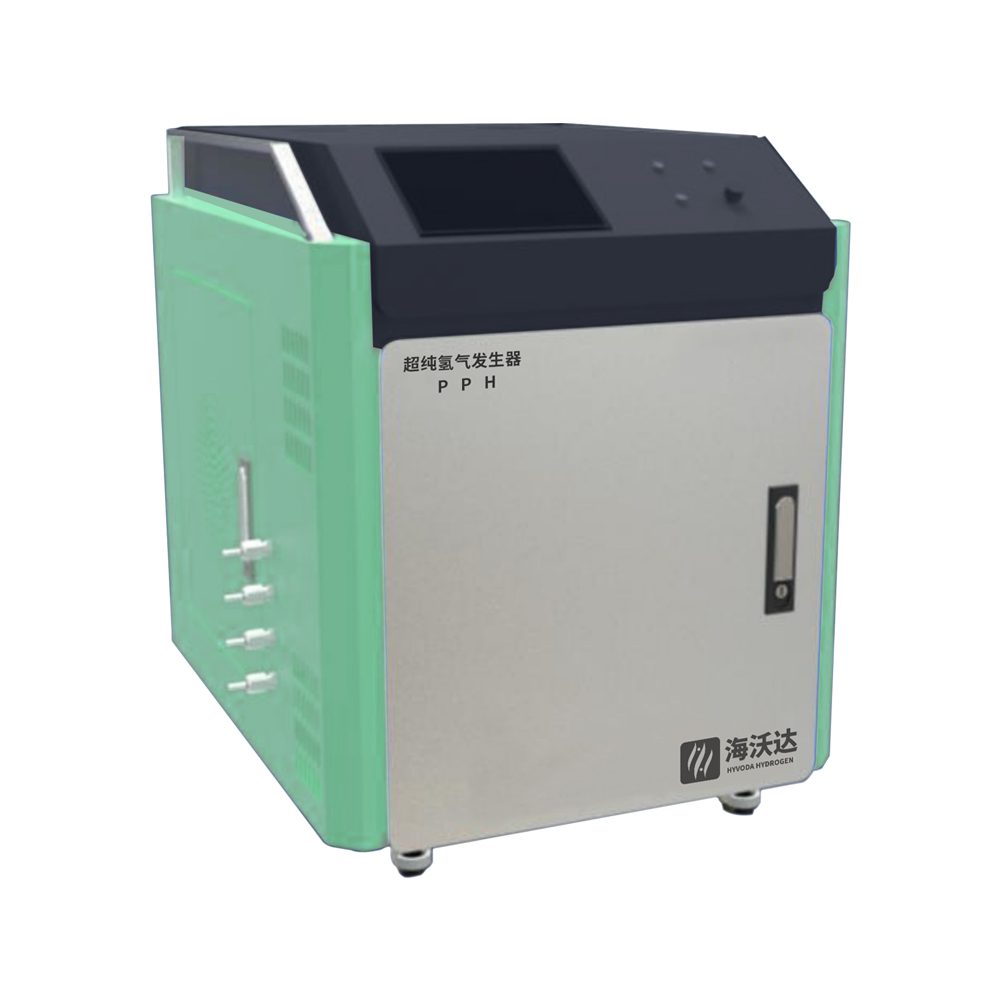
What purity levels can the PPH series hydrogen generator achieve?
All PPH units deliver consistent 99.9999999% (9N) ultra-pure hydrogen, with trace oxygen impurity levels below 1 ppb, fully meeting semiconductor and analytical laboratory high-purity gas standards for premium renewable hydrogen preparation.
Does the PPH generator require dedicated full-time operating staff?
Continuous manual supervision is not required. The entire system operates under fully automated PLC control with remote fault alerting, and only periodic routine preventive maintenance is necessary, which can be completed by the client’s in-house technical personnel.
Can we customise the hydrogen output capacity to match our exact process demand?
Yes. We offer modular single-unit capacities of 0.1, 0.3 and 0.6 Nm³/hr, with parallel multi-unit layouts engineered to deliver customised total hydrogen flow rates tailored to unique customer consumption profiles for custom small hydrogen production plant.
Is PEM technology better suited than alkaline electrolysis for small-scale precision applications?
Each electrolysis technology carries distinct operational merits. Alkaline Electrolyzer bipolar systems deliver lower per-unit power consumption for large continuous industrial hydrogen demand and large green hydrogen production plant, while PPH PEM generators offer unmatched compactness, ultra-high purity, zero alkaline chemical handling and quiet, cleanroom-compatible operation for low-flow precision lab and micro-manufacturing use cases. Our engineering team evaluates upfront capital expenditure and full lifecycle ownership costs to guide clients to the optimal technology selection.
How complex is on-site installation of the PPH series unit?
Installation is streamlined via fully cabinetised pre-integrated design. Standard single-unit setup can be completed within 1–2 working days by our field engineers. We provide full installation supervision, commissioning and operator training as part of the supply scope.
What noise levels does the PPH hydrogen generator produce during operation?
The equipment features optimised silent blower and pump assemblies, with sound pressure levels below 70 dB(A) at a 1-metre distance, making it suitable for quiet laboratory, medical and office-adjacent production spaces.
What is the standard preventive maintenance schedule?
Full detailed maintenance timelines and component replacement cycles are documented within the official equipment Operation & Maintenance Manual. Routine minor inspections are scheduled monthly, with major stack and purification module service intervals spanning multiple years of continuous operation.