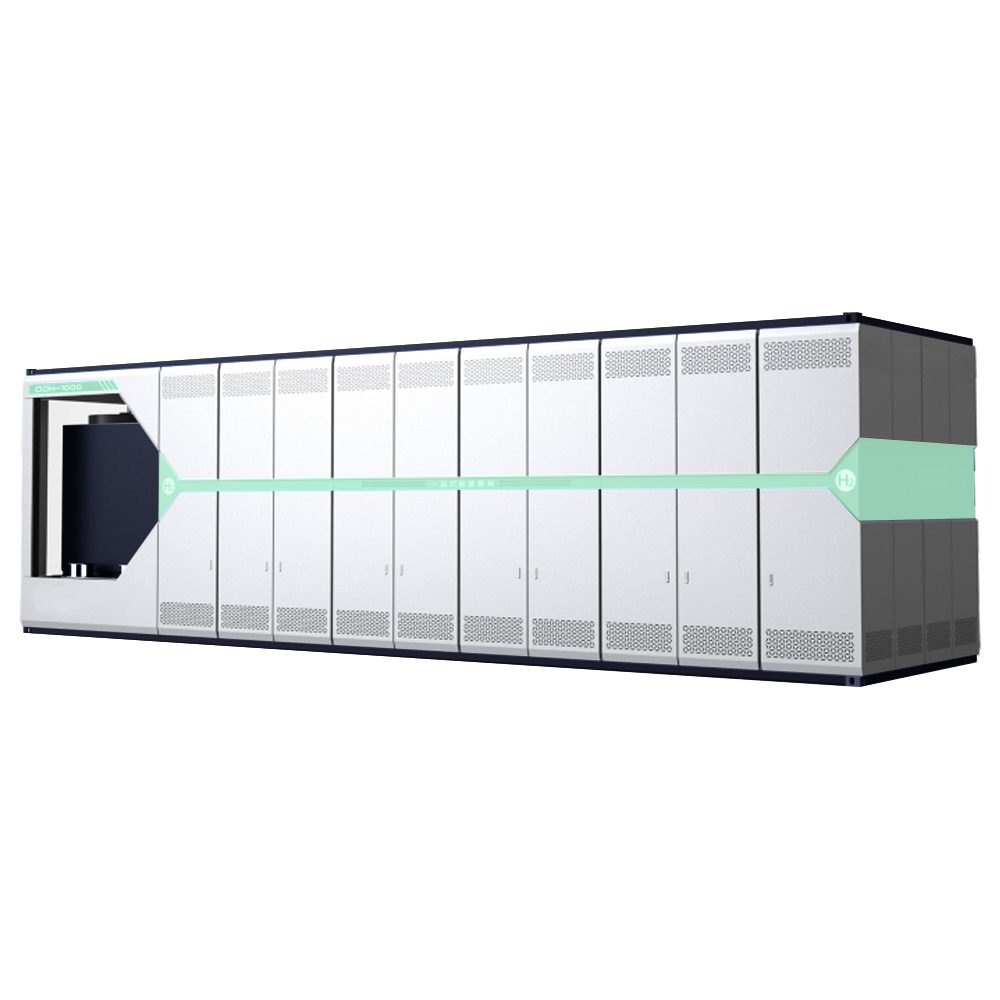
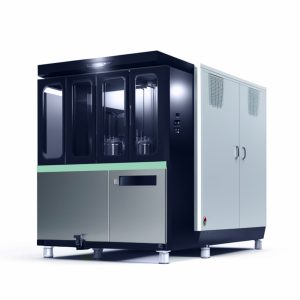
ODH Series Hydrocarbon Mixture Generation System Hydrogen-Rich Syngas Generator

It is a standard Hydrocarbon Mixture Generation System and syngas generator adopting thermal oil circulation heating and methanol reforming. The output hydrogen-rich hydrocarbon mixture needs no deep purification, mainly used for factory boiler combustion and urban natural gas pipeline hydrogen blending. It can coordinate with Wind Solar Hybrid System to realize collaborative energy supply for industrial parks.

Features

  • Large-Scale Production: Single unit capacity over 1000Nm³/h, scalable parallel layout for large green hydrogen plant
  • Industrial Thermal Oil Heating: Closed circulation thermal oil maintains stable reforming temperature, reducing auxiliary power consumption
  • High-Combustion Hydrocarbon Mixture: Syngas with 65–75vol% hydrogen, total combustible ≥95% as direct fuel
  • Fully Customizable: Adjustable flow, delivery pressure and container layout per hydrogen blending station conditions
  • Integrated Explosion-Proof Frame: Standardized skid design meets industrial flammable gas safety standards
  • Unattended Automated Operation: PLC logic with cloud remote real-time monitoring

Applications

  • Natural gas network hydrogen blending stations

  • Large industrial parks needing hydrogen-rich combustion gas

  • Distributed energy supply for factories

  • Bulk fuel gas supply for high-temperature processes

Onsite Generation of High-Combustible Hydrogen-Rich Gas

This Hydrocarbon Mixture Generation System serves as a dedicated syngas generator built on mature methanol reforming catalytic technology. The core methanol steam reforming reaction takes place inside the reactor, converting liquid methanol-water feed into hydrogen-carbon mixed syngas without secondary impurity removal procedures. Simplified process flow cuts auxiliary equipment investment and daily maintenance workload. The produced hydrocarbon mixture can be used independently for boiler combustion or injected into municipal natural gas pipelines to realize fossil fuel decarbonization, perfectly matching Wind Solar Hybrid System distributed energy storage and consumption modes for hydrogen production plant and green hydrogen plant construction.

Thermal Oil-Heated Methanol Reforming Technical Mechanism

The core chemical reaction of this syngas generator is methanol steam reforming: CH₃OH + H₂O ⇌ 3H₂ + CO₂ under 220–280℃ constant temperature catalysis. The whole Hydrocarbon Mixture Generation System adopts closed heat transfer oil circulation as constant heat source, different from electric heating reforming devices:
  1. Thermal oil circulates through reactor jacket to supply stable endothermic reaction heat, avoiding temperature fluctuation caused by electric load variation;
  2. Post-reaction high-temperature syngas exchanges heat with incoming methanol-water raw material to realize waste heat recovery;
  3. No PSA adsorption and desorption circulation is configured, so the output hydrocarbon mixture retains CO₂ and CO components to reach high calorific value suitable for direct combustion.

    This heating mode greatly reduces peak power demand, making the syngas generator well-matched with unstable power output of Wind Solar Hybrid System

Core Advantages of ODH Hydrocarbon Mixture Generation System

  1. Integrated explosion-proof container skid layout, convenient hydrogen production plant overall planning
  2. Complete factory assembly and 72-hour full-load test; on-site pipeline connection completes commissioning within 1–2 weeks
  3. AI PLC automatic control with real-time data recording of syngas generator operating parameters
  4. 30–110% dynamic load adjustment adapts fluctuating hydrogen blending and heating gas consumption
  5. Closed thermal oil circulation stabilizes reforming temperature, cutting auxiliary power loss of methanol reforming
  6. No PSA purification module, reducing equipment quantity and routine replacement costs of adsorbent
  7. Standard delivery pressure ≤0.4MPaG, matched customized booster skids for long-distance pipeline transportation
  8. 15-year design service life of core reforming catalyst for long-term continuous operation
  9. Modular parallel design allows stepwise capacity expansion for large hydrogen blending stations

Single-Stage Methanol Reforming Syngas Production Flow

  • Feed Mixing & Vaporization: Metered methanol and demineralized water are blended and preheated by syngas waste heat exchanger
  • Constant-Temperature Thermal Oil Heating: Circulating heat transfer oil provides stable reaction heat for methanol reformer reactor
  • Catalytic Methanol Reforming: Mixed vapor contacts proprietary catalyst to decompose into hydrogen-rich hydrocarbon mixture syngas
  • Cooling & Condensation: High-temperature crude gas cools to ambient temperature; unreacted methanol condensate recycles back to raw material tank
  • Direct Syngas Delivery: Unpurified hydrocarbon mixture flows to blending pipelines or industrial furnishes
  • Waste Heat Reuse: Residual heat of cooled syngas preheats incoming feed to lower total energy consumption of the syngas generator

ODH Series General Technical Parameters Table

ODH Series Hydrogen-Rich Gas Generator General Technical Parameters

Parameter Item Standard Specification
Combustible Gas Volume Fraction 65 ~ 75 vol% hydrogen-rich mixture, total combustible ≥95%
Rated Outlet Pressure (PAH) ≤0.4 MPaG
Product Gas Dew Point ≥ -10 ℃
Outlet Gas Temperature ≤40 ℃
Full Equipment Service Lifespan 15 years
Adjustable Operating Flow Range 30% ~ 110% of rated capacity of methanol reformer
Purification Configuration No secondary PSA purification, direct output from methanol reforming unit

Customised Capacity Technical Table

Parameter Category Standard Technical Index
Single Unit Gas Production Capacity >1000 Nm³/h, fully customized according to hydrogen production plant demand
Methanol Consumption Calculated based on actual rated gas throughput of hydrogen generator
Circulation Pump Power Matched with customized flow design of methanol reformer
Total Installed Power Optimized thermal oil heating power configuration
Cooling Water Circulation Demand Custom sized according to unit heat load
Instrument Air Consumption Configured to meet explosion-proof control standards
Overall Equipment Dimension (L×W×Hmm) Custom container layout based on green hydrogen plant project drawings

Note: ODH series full EPC delivery includes hydrogen generator main unit, explosion-proof control cabinet, cooling water system and thermal oil heating system. All dimensions and consumption data shall follow final customized engineering drawings.

FAQ’S

What heating mode does ODH methanol reformer adopt and what are its advantages

ODH hydrogen gas generator uses closed thermal oil circulation heating for methanol reforming reaction. Stable reaction temperature improves catalyst service life, and waste heat recovery cuts overall energy consumption of reforming methanol compared with electric heating reforming equipment.

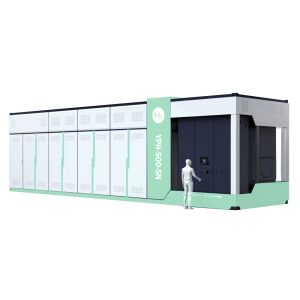
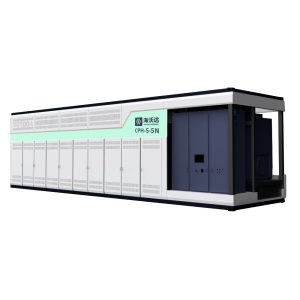
What is the core difference between ODH and CPH/YPH methanol reforming units

ODH produces hydrogen-rich mixed gas without PSA or metal membrane purification, for pipeline hydrogen blending. CPH/YPH add multi-stage purification to output high-purity hydrogen for semiconductor green hydrogen plant manufacturing.

Can ODH hydrogen-rich syngas match CO₂ Capture and utilization equipment

The crude gas from methanol cracking contains concentrated carbon dioxide components. Supporting CO₂ Capture & CO₂ Purification system can recover by-product CO₂ to realize circular industrial decarbonization for gas station projects.

Why ODH series is more cost-effective than PEM Electrolyzer for hydrogen blending stations

ODH methanol reformer has low installed power demand and large single-unit output. PEM water electrolysis consumes massive electricity, which brings high operating cost for long-term natural gas hydrogen blending hydrogen production plant operation.

Can multiple ODH methanol reformer skids run in parallel for super-large blending stations

All customized ODH hydrogen generator units support parallel layout. Clients can expand gas output step by step to match the growing hydrogen mixing proportion of municipal natural gas pipeline network.

What raw material and water standards are required for stable ODH methanol steam reforming

Industrial methanol above 99.85% purity and qualified demineralized water are required. Impure feedstock will cause coking on reform catalyst and reduce the continuous operation stability of the whole hydrogen-rich gas system.

Full EPC Lifecycle Service Support

Service Stage Detailed Service Contents
Pre-Sales Engineering Design Gas consumption calculation, hydrogen blending scheme design, site layout drawing and hydrogen production plant project evaluation
Factory Pre-Fabrication & Testing Full module assembly, pressure inspection and 72-hour running test of hydrogen generator before shipment
On-Site Installation & Commissioning Pipeline construction supervision, methanol reforming system debugging, safety verification and formal handover
Professional Operator Training Systematic courses about how does a hydrogen generator work, startup & shutdown, maintenance and safety operation of methanol reformer
24/7 Global After-Sales Support Remote online troubleshooting, global spare parts supply and regular on-site inspection for green hydrogen plant
System Capacity Upgrade Retrofit Later flow expansion, pressure adjustment and thermal oil system optimization for existing ODH methanol reforming equipment

Related products

wpChatIcon
wpChatIcon