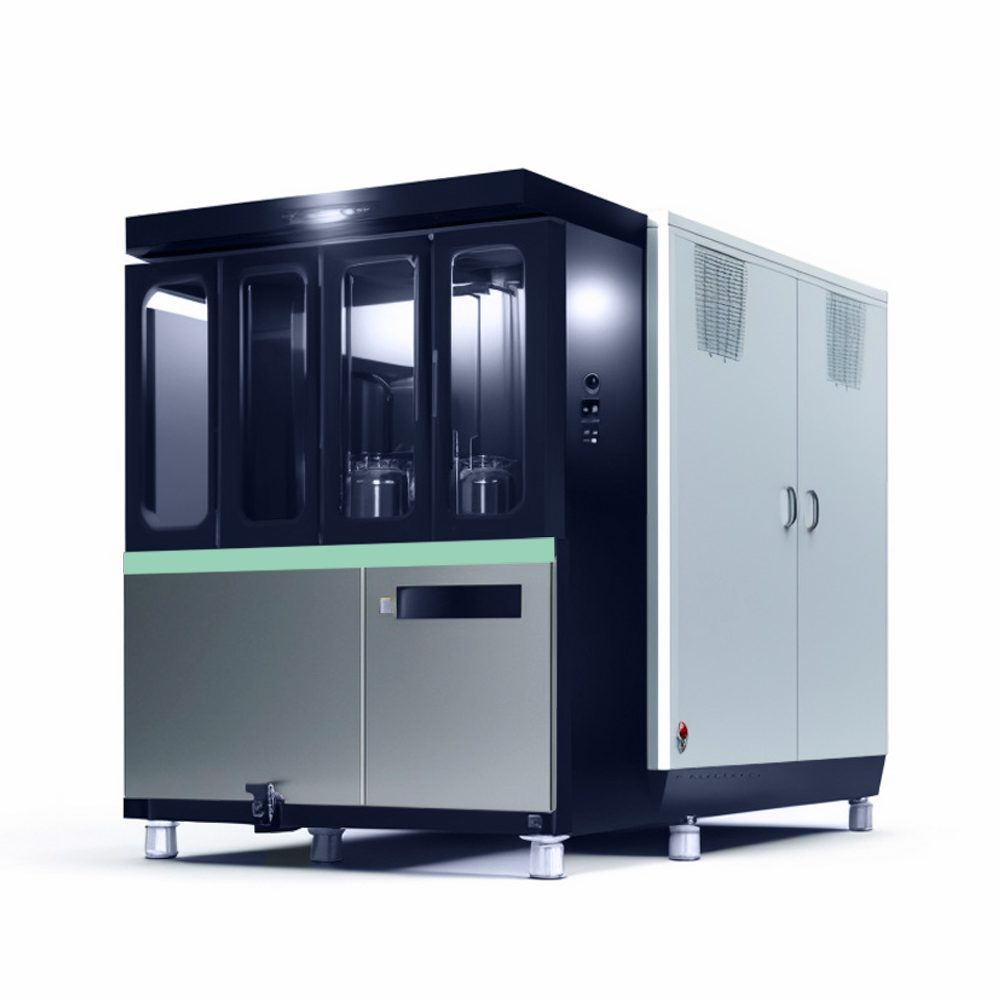
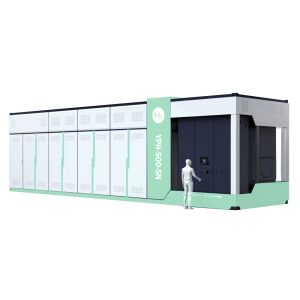
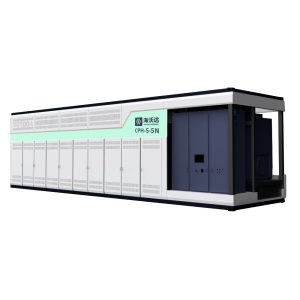
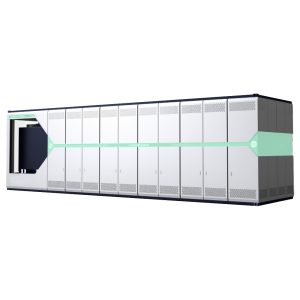
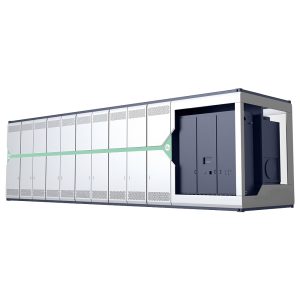
MPH Series Methanol-to-Hydrogen Integrated Fuel Cell Power System

The all-in-one unit realizes closed-loop Methanol-to-Hydrogen conversion inside single skid. It integrates methanol reforming, hydrogen purification and fuel cell stacks to constitute complete Fuel Cell Power Plants. The equipment serves remote areas without stable grid power, matching distributed Energy Storage System to provide stable backup power supply.

Features

  • All-in-One System – Hydrogen production, purification, fuel cell, energy storage, and control in one unit.

  • High-Purity Hydrogen Supply – Ensures stable fuel cell performance and long service life.

  • Fast Start-up – ≤30 minutes to full operation.

  • Compact & Portable – Easy transport and deployment in remote locations.

  • Automated Control – Intelligent monitoring and minimal operator intervention.

  • Low Self-Consumption – Maximizes net power output to the load.

Applications

  • Emergency power for disaster relief

  • Backup power for telecom base stations

  • Mobile power stations for remote operations

  • Off-grid industrial and commercial facilities

  • Supplementary power in renewable energy systems

On-Site Zero-Emission Standalone Power Supply

This integrated unit realizes closed-loop Methanol-to-Hydrogen energy conversion. It takes liquid methanol as hydrogen carrier, completing methanol steam reforming inside the reactor to generate qualified hydrogen required by fuel cells, then converts chemical energy into stable electric power via electrochemical reaction. Equipped with built-in Energy Storage System to buffer power fluctuation, the system avoids unstable power output caused by delayed hydrogen production adjustment. Compared with separate hydrogen tank + fuel cell schemes, it eliminates high-pressure hydrogen storage risks and repeated fuel transportation costs, forming self-sufficient Fuel Cell Power Plants for remote green hydrogen plant and off-grid microgrid projects.

Complete Technical Route: Methanol-to-Hydrogen + Fuel Cell + Energy Storage

1. Methanol Steam Reforming Hydrogen Production

Methanol and demineralized water are proportionally mixed, vaporized by waste heat of tail gas, then enter fixed-bed reformer for catalytic cracking to produce hydrogen-rich crude syngas containing CO₂ and trace carbon monoxide. The whole reforming loop recycles PSA purge tail gas as heating fuel to cut auxiliary power loss of the Methanol-to-Hydrogen system.

2. PSA High-Purity Purification

Multi-tower molecular sieve PSA unit removes CO, hydrocarbon impurities from crude syngas, controlling residual CO below 0.2ppm. Low-impurity hydrogen meets strict intake standard of PEM fuel cell stacks, preventing catalyst poisoning inside Fuel Cell Power Plants.

3. PEM Fuel Cell Electrochemical Power Generation

Purified hydrogen enters fuel cell anode, oxygen from air passes cathode. Protons penetrate polymer membrane to combine with oxygen, generating continuous DC electricity, and pure water is the only byproduct without pollutant discharge.

4. Energy Storage System Load Buffering

Lithium energy storage module is synchronously integrated into the skid. When instantaneous peak load occurs, the Energy Storage System instantly supplements power; during light load, excess electricity is stored to stabilize the output curve of Fuel Cell Power Plants, reduce frequent start-stop of the methanol reformer and extend catalyst service life.

Core Advantages of MPH Methanol-to-Hydrogen Unit

  • All-in-one explosion-proof skid layout, convenient site layout of off-grid Fuel Cell Power Plants
  • Complete factory assembly & 72-hour full-load test; on-site electrical & pipeline connection finished within 1–2 weeks
  • AI PLC unattended control, real-time data recording of Methanol-to-Hydrogen operating parameters
  • Built-in Energy Storage System dynamically matches fluctuating load to avoid power supply interruption
  • Tail gas waste heat recovery reduces heating consumption of methanol reforming, improving overall energy efficiency
  • Cold startup within 30 minutes to rated power, suitable for emergency power demand scenarios
  • Low running noise fits residential and disaster relief station deployment
  • 15-year design service life for reformer catalyst and fuel cell core components
  • Modular parallel expansion allows stepwise capacity increase for large-scale distributed Fuel Cell Power Plants

MPH Series General Technical Benchmark Table

Parameter Item Standard Specification
Output Hydrogen Purity for Fuel Cell ≥99.999 vol%, CO ≤0.2 ppm
Full System Cold Startup Time ≤30 min to rated power
Auxiliary Self-Consumption Optimized to maximize net load power
Design Service Life of Core Equipment 15 years
Operation Mode Unattended automatic running with remote cloud supervision
Output Voltage Standard Custom AC/DC matching hydrogen production plant load

MPH Series Full Model Performance Parameter Table

Rated Continuous Power Output (kW) Rated Hydrogen Production (Nm³/h) Methanol Consumption (kg/h) Circulation Pump Power (kW) Total Installed Auxiliary Power (kW) Cooling Water Demand (t/h) Instrument Air (Nm³/h) Overall Dimension L×W×Hmm
6 6 4.8 5 3 1 1 6066×2446×2590
15 15 12 3 6 1 1 6066×2446×2590
30 30 24 4.5 8 2 2 6066×2446×2590
100 100 80 15 20 5 5 10200×3150×3430
Note: Each MPH hydrogen gas generator integrates methanol reformer, PSA purification and fuel cell power modules. Dimensions are reference values, adjustable according to green hydrogen plant site layout requirements.

FAQ’S

What core difference exists between MPH all-in-one power unit and separate OPH hydrogen generator plus fuel cell stacks

MPH integrates methanol reforming, PSA purification and fuel cell power generation into a single skid, saving pipeline layout and control cabinet investment. Independent OPH hydrogen generator needs extra fuel cell matching and auxiliary piping for off-grid power supply.

Can MPH methanol reforming system be equipped with CO₂ Capture modules for carbon reduction projects

Methanol steam reforming generates concentrated CO₂ syngas. Supporting CO₂ Capture & CO₂ Purification devices can recover by-product carbon dioxide to realize low-carbon operation for remote green hydrogen microgrid stations.

Why MPH reformed methanol power system outperforms PEM Electrolyzer fuel cell power supply for off-grid sites

PEM Electrolyzer requires massive grid power to produce hydrogen, limited by remote weak power grids. MPH only consumes liquid methanol feedstock without high electricity input, perfectly fitting off-grid disaster relief and telecom backup power scenarios.

How does the built-in energy storage buffer optimize the running stability of MPH hydrogen generator

The internal energy storage module balances instantaneous power load fluctuations during methanol reforming startup and peak power demand, avoiding frequent load adjustment of the reformer and extending catalyst service life.

Can multiple MPH units run in parallel to build large-scale off-grid green hydrogen power plant

All MPH models support modular parallel layout. Clients can expand total power output step by step to construct distributed microgrids for industrial parks and remote mining zones.

What fuel standard guarantees long stable operation of MPH reforming methanol equipment

Industrial methanol above 99.85% purity and qualified demineralized water are required. Impure feedstock will form carbon deposition on reform catalyst and shorten the service life of PSA purification components.

Integrated Methanol-to-Hydrogen & Fuel Cell Working Flow

  • Feed Vaporization: Methanol & demineralized water mixed and preheated by reforming waste heat exchanger
  • Catalytic Methanol Reforming: Mixed vapor reacts on proprietary catalyst to generate hydrogen-rich crude syngas
  • PSA Purification: Molecular sieve removes trace CO to obtain fuel-cell-grade high-purity hydrogen
  • Fuel Cell Power Generation: Hydrogen electrochemically reacts with air to output direct current
  • Energy Storage Regulation: Energy Storage System balances peak & valley power load
  • Intelligent Dispatch: Central control automatically coordinates reformer hydrogen output and fuel cell power load
  • Tail Gas Recycling: PSA waste gas provides heat for the methanol reformer to lower auxiliary power consumption

Full Lifecycle Turnkey Service Support

  • Pre-Sales Design: Off-grid load calculation & Fuel Cell Power Plants layout planning
  • Factory Pre-Testing: Full assembly and full-load running test of Methanol-to-Hydrogen equipment
  • On-Site Commissioning: Pipeline & electrical construction supervision, system calibration
  • Operator Training: Systematic courses covering reforming, fuel cell and Energy Storage System operation
  • 24/7 After-Sales: Remote fault diagnosis and global spare parts supply
  • Capacity Retrofit: Later power expansion for existing Fuel Cell Power Plants units

Related products

wpChatIcon
wpChatIcon